A Professional's Review of the Jelly Bean Happy Easter Embroidery Design
First Impressions: Playful Festivity for the Spring Season
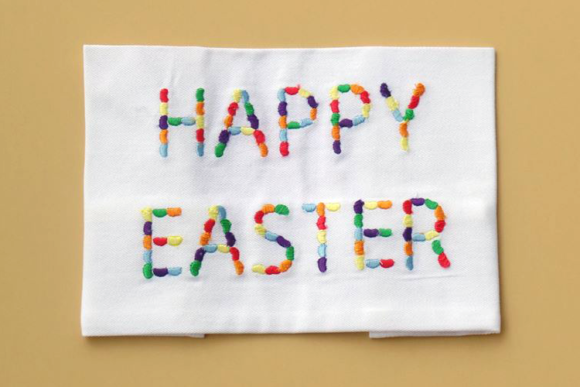
From the title alone, the Jelly Bean Happy Easter design promises a specific mood: cute, playful, and unmistakably festive. This isn't a rustic farmhouse piece or a minimal modern graphic. It's a design built for celebration, aiming for immediate joy and recognition. For a craft fair booth in spring, this mood is a powerful starting point. It taps directly into the seasonal excitement and gift-giving mindset of customers browsing for handmade Easter items.
Where Jelly Bean Happy Easter Stands Out in Your Booth
Visualizing my display table, I immediately place this design on products meant to attract attention and prompt a smile. Its strength lies in being a clear, thematic focal point.
- Tote Bags & Market Bags: A well-placed Jelly Bean Happy Easter embroidery on a light-colored canvas tote becomes an instant seasonal statement piece. It’s practical and decorative.
- Tea Towels & Aprons: In the kitchen category, this design adds a burst of festivity. On a tea towel, it transforms a utilitarian item into a cheerful, giftable handmade product.
- Pillow Covers: A smaller version on a pillow cover can create a charming seasonal accent for a home decor section.
- Embroidered Patches & Pouches: As a standalone patch or on a small fabric pouch, it becomes a lower-price-point item perfect for quick sales and impulse buys.
Caps can be tricky with curved surfaces, but a test would determine if the design’s elements adapt well. The key is choosing products where the playful theme aligns perfectly with the item's use.
Production Practicality: What to Check Before Hooping
Turning a digital embroidery file into a reliable, batch-produced craft fair product requires a hands-on review. The product description mentions it comes in multiple embroidery file formats, which is excellent for flexibility across machines. However, the designer’s job is to validate the following on physical materials.
- Stitch Density & Detail Clarity: Designs with “jelly bean” elements might have dense, filled areas. I would always test on scrap fabric first to check for puckering and ensure small details, like possible lettering in “Happy Easter,” remain clear, especially at smaller sizes for patches or pouches.
- Fabric & Stabilizer Strategy: For kitchen towels or textured fabrics, a robust stabilizer is non-negotiable to maintain crispness. On dark fabrics, thread color contrast must be planned—bright, cheerful colors are likely needed for this design to pop.
- Hoop Size & Scaling: The design’s intended use as a focal point suggests a medium to larger hoop size for bags and towels. But can it be successfully reduced for a small accent without losing its charm? A test stitch at different scales is a critical step.
Never proceed to batch production without creating at least one real mockup on the final product material, like a tea towel or tote bag. This reveals how the design truly interacts with the fabric texture and whether the thread colors chosen meet the visual expectation.
Selling Power: Customer Attention and Product Value
At a bustling fair, Jelly Bean Happy Easter works because it’s easy to understand at a glance. A customer doesn’t need to study it; the theme is immediate. This speeds up buying decisions. For Etsy sellers and online listings, this clarity also photographs well—a bright, clean embroidery on a neutral background creates an attractive, professional printable mockup or listing photo.
The design enhances product value by offering clear, handmade customization. It feels specialized for the season, which customers pay a premium for. In your booth, grouping all products featuring this design creates a strong, cohesive section that tells a story, boosting your booth display strength and brand consistency as a maker of festive goods.
Critical Notes for the Commercial Maker
As an embroidery designer reviewing this for commercial use, my final checklist is bluntly practical.
- Confirm the included embroidery file formats work with your machine and software.
- Verify the commercial licensing terms for the design file. The description notes it can be used for multiple embroidery, but the specifics for selling finished products must be clear.
- Plan your thread palette. Playful, jelly bean-inspired colors likely mean multiple thread changes. Factor this into your production time and cost.
- Consider batch production. Is the design repeatable without excessive thread breaks or lengthy stitch times? A smooth-running design allows you to efficiently stock your booth.
- Think about versatility. Could this design, with its happy message, be slightly adapted for other spring celebrations? This isn't always possible, but it extends a design’s shelf life.
Final Judgment: A Seasonal Asset for the Creative Entrepreneur
The Jelly Bean Happy Easter machine embroidery design is a targeted, mood-specific asset for the spring selling season. Its success hinges on pairing it with the right products—where its playful festivity is an asset, not a mismatch. For the small shop product creator aiming for a weekend craft fair, it offers a clear thematic path to a range of handmade items. However, its practical execution depends entirely on the pre-production diligence of testing stitch density, scaling, and fabric compatibility. With that work done, it can become a reliable, attention-grabbing part of your seasonal embroidered patch, apron embroidery, and gift product lineup, helping you celebrate Easter—and sell it—in style.